












MAINSTREAM DETOX

17:31

TUESDAY JULY 14JULY 14, 2026

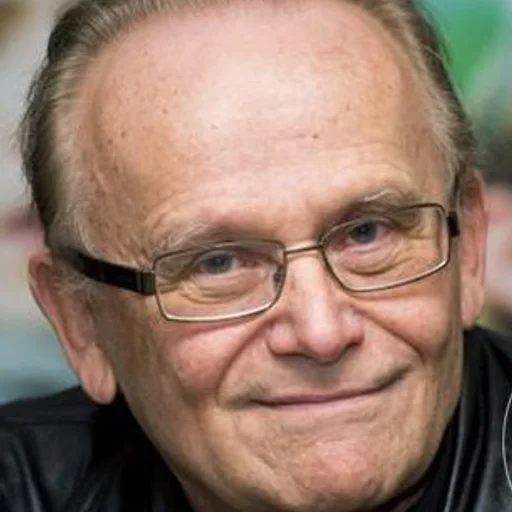
Jaroslav Husár

prof. Ing., CSc.. Mgr. economics

Hornet

Prof. Jaroslav Husár belongs to the most important Slovak economists of the second half of the 20th century. He is considered one of the pioneers of econometrics, economic modeling and quantitative methods in Czechoslovak economic science. From the perspective of the history of economic thought in Slovakia, Jaroslav Husár represents an exceptional personality combining academic economics, international experience from UN institutions and a deep interest in the practical functioning of the national economy.

3 published articles

JUL
6
Jaroslav Husár · July 6, 2026 · 7 min read

According to Professor Jaroslav Husár, the European Central Bank did not just fall asleep with its reaction to inflation – it failed above all in its understanding. In his text, he explains why raising interest rates alone cannot replace thorough econometric modeling of inflationary processes, and recalls that he pointed out the risks of expansionary monetary policy years ago. Based on his own mathematical models, he concludes that without a deeper understanding of the relationship between the money supply, the price level and the real economy, monetary policy risks turning into improvisation rather than scientifically based economic management.

Read full text
JUN
13
Jaroslav Husár · June 13, 2026 · 7 min read

European economies are once again struggling with high deficits and growing public debt. According to prof. According to J. Husár, it is not only a political failure, but a deeper methodological problem: the Maastricht debt criterion of sixty percent of GDP was set without sufficient respect for the dynamics of individual economies. Using two mathematical models, he shows that the relationship between debt and the performance of the economy cannot be bound by one flat number for all states.

Read full text
JUN
6
Jaroslav Husár · June 6, 2026 · 7 min read

The Slovak government presented a package of measures to help the economy. However, it does not solve the essence of the problem: economic development, investment and the creation of new production capacities.

Read full text