
Are we still afraid of nuclear war?
The post of my Facebook friend Radim Hrbáč made me think and write this article, from whom I also borrowed the title of the article. In my reflection on the merits of the question "are we still afraid of nuclear war?" look from a different point of view. Who and why is "getting used" to nuclear war and war in general? And why do they do it?
What is the nuclear doctrine?
Under the termnuclear doctrinemeans an official political and military document or set of principles whichdetermines how a state disposes of its nuclear weapons and under what conditions it is prepared to use them.
It is a strategic framework that serves primarily tonuclear deterrence(deterence). Through it, the state sends a clear signal to potential enemies, what level of aggression will provoke a nuclear retaliation.
Each nuclear doctrine usually defines several essential parameters:
·Terms of deployment:A precise description of the situations that justify the use of atomic weapons. It is often a response to the use of weapons of mass destruction by the enemy or a conventional attack that immediately threatens the very existence of the state.
·First Use Policy (First Use vs. No First Use):
No First Use:The state undertakes to use nuclear weapons exclusively as a retaliatory strike (e.g. China or India).
Option of first use:A state reserves the right to strike first with nuclear weapons if conventional military capabilities fail (e.g. USA, Russia or Pakistan).
·Scope of Retaliation:It determines whether the response will be massive (destruction of the entire enemy) or flexible and limited (eg, a tactical strike on military targets to de-escalate the conflict).
·Decision-making authority:It specifies the political and military hierarchy - that is, who exactly holds the proverbial "nuclear button" and gives the final order to detonate (usually the head of state or prime minister).
The main types of strategies in doctrines
·Mutually Assured Destruction (MAD):A strategy from the Cold War era, where both sides know that the first attack will provoke total retaliation, leading to the liquidation of both states.
·Minimum credible deterrence:The state does not possess thousands of warheads, but only the amount that reliably deters the enemy from attacking due to the threat of unacceptable losses (eg Great Britain or France).
·Enhanced deterrence:The commitment of a nuclear power to protect its non-nuclear allies in the event of an attack (the so-called nuclear umbrella provided by, for example, the USA within NATO).
What do the nuclear doctrines of the major nuclear weapons owners look like and how have they changed over time?
U.S.A:
The main change in US nuclear doctrine after 2022 is the shift from bilateral rivalry (US vs. Russia) to the strategic necessity of confronting two nuclear powers simultaneously (Russia and China). While the doctrine until 2022 (formulated especially inNuclear Posture Reviewfrom 2018 under Donald Trump) reacted to the return of great power rivalry and bet on flexible low-power weapons, the new doctrine issued at the end of 2022 by the Joe Biden administration reflects the dramatic growth of China's arsenal and Russia's preventive conventional strike in Ukraine, which the US did not expect, although it had been preparing its proxy war of Ukraine against Russia for several years not only by financing, arming, but also training of the Ukrainian army and special forces.
Russian Federation:
The main difference between Russia's nuclear doctrine before 2022 and after it (specifically after the major revised version signed in November 2024) is a significant lowering of the threshold for the use of nuclear weapons and an effort to politically deter the West in the context of the war in Ukraine. While the older doctrine defined nuclear weapons strictly as a means of last resort in the event of a threat to the very existence of the state, the new version allows for a nuclear response even to conventional attacks that "only" critically threaten sovereignty.
The change in nuclear doctrine in 2024 occurred as a response to NATO countries supplying Western advanced weapons, intelligence and satellite support incl. determining and targeting targets in the deep territory of the Russian Federation.
People's Republic of China:
The main change in China's nuclear doctrine after 2022 is the transition from a passive minimal deterrence to a more active, technologically advanced and numerically robust deterrence, which effectively changes the military's operational approach, despite Beijing's outward declaration of policy continuity.
While the official rhetoric of No-First-Use (NFU) and commitment to minimal defense remains formally unchanged, actual military capabilities and operational procedures post-2022 show a fundamental shift to a more offensive and reactive posture.
The adjustment of China's nuclear doctrine and the massive expansion of its arsenal are driven by new major strategic, technological and geopolitical factors that have outweighed Beijing's decades-long policy of restraint. The main trigger is the fear of vulnerability to the US coupled with its ambition to dominate the Western Pacific region and resolve the Taiwan issue. And the newly taken into account experiences from the war in Ukraine and especially the change in China's military and economic power, which is becoming a world power, also play a role.
Pakistan:
Pakistan's nuclear doctrine has not undergone a radical structural change after 2022, but has evolved into a more aggressive and technologically advanced phase of the Full Spectrum Deterrence (FSD) concept. The main difference is the official declaration of the ability to hit targets at any distance "from zero meters to 2,750 kilometers" and adaptation to Indian precision conventional strikes.
The "zero meter strike" doctrine responds to India's change in tactics from the 2019 (Balakot) military crisis, and especially when subsequent conventional engagements showed that India can operate in the gray zone below Pakistan's nuclear threshold using drones, cyber attacks and precision-guided munitions. But the fact that there was an incident in March 2022 when India accidentally launched a supersonic missile also contributed to the change in doctrineBrahMoson Pakistani territory. Although Pakistan did not react militarily at the time, the event fundamentally influenced Pakistan's strategic thinking after 2022. Islamabad began to place enormous emphasis in international diplomacy and in its internal doctrine on the risk of inadvertent escalation and failure of command and control systems on the Indian side, which led to even greater vigilance and permanent combat readiness of Pakistani forces, i.e. readiness to conduct a secondary retaliatory strike, including with nuclear weapons.
Indie:
Official Indian nuclear doctrine has not formally changed after 2022, but there has been a fundamental shift in its practical and operational aspects. While in the period up to 2022, India strictly adhered to the policy of separate nuclear warheads from the carriers during peacetime, in the period after 2022, it switches to the so-called strategic ambiguity (strategic ambiguity) accompanied by technological modernization, which effectively weakens the earlier promise of "no first use of nuclear weapons" (No First Use - NFU).
Strategic ambiguity is a deliberate foreign policy and military strategy in which the state deliberately does not say clearly how exactly it will react to a certain situation or crisis. Instead of establishing clear "red lines", the state keeps its hands free. By doing so, he keeps his opponents on edge, forcing them to be much more cautious.
Francie:
In response to the 2022 Russian invasion of Ukraine and geopolitical upheavals in the Transatlantic Alliance, French nuclear doctrine has undergone its most fundamental transformation in 30 years. In March 2026, President Emmanuel Macron officially presented the concept of the so-called "advanced deterrence" (dissuasion avancée), which should be a kind of nuclear umbrella over NATO countries in Europe with the possibility of allocating nuclear weapons to countries that have so far committed to a nuclear-free doctrine on their territory.
While the core of sovereign decision-making has remained, the comparison to 2022 and beyond shows a shift away from strict unilateralism towards European collective defence.
Great Britain:
The main change in the British nuclear doctrine at the turn of 2021 and 2022 is the end of the long-term process of gradual disarmament, the increase of the limit for the number of nuclear warheads from 180 to 260 and the reduction of transparency regarding the details of the nuclear arsenal. This major revision came about through a strategic government documentIntegrated Review(with its validity redefined by the new security reality following the Russian invasion of Ukraine in February 2022).
While the principle of maintaining a continuous presence of one nuclear submarine at sea (Continuous At Sea Deterrence– CASD) remains the same, the specific parameters of the doctrine show fundamental differences. For example, that the doctrine is built from disarmament to armament - from the historical minimum (180 warheads) after 2022, on the contrary, it increased the ceiling to 260 warheads. Or that openness has been replaced by secrecy, when previously London reported exactly how many missiles and warheads it had on one submarine at sea, today it has completely kept these details secret. The goal is for Russia or China to have no idea how strong the retaliation against them is floating on the sea at any given second. And new types of goals are also determined. Prior to 2022, British weapons served solely as a deterrent against a nuclear attack by another state. Newly, Britain warns that it can attack a country that does not have nuclear weapons with a nuclear attack, if it attacks the UK with a devastating cyber attack (eg knocking out the power grid and hospitals) or with chemical weapons. And last but not least (a favorite mantra for five years) the change of the main enemy, that before Britain focused on the fight against terrorism and instability in the Middle East, and from 2022 the main and acute enemy is Russia, while China is defined as a "systemic challenge". No wonder, when Britain itself becomes the Middle East, it won't be at enmity with itself, will it?
North Korea:
The main difference is that after 2022, North Korea's nuclear doctrine switched from defensive deterrence to an offensive strategy of pre-emptive strike, which was confirmed by the new Nuclear Forces Act adopted in September 2022. While until then nuclear weapons served primarily as a tool for negotiation and defense of the regime, now their status is "irreversible", i.e. it is calculated with offensive use, or the possibilities of use have expanded significantly.
From these changes in nuclear doctrines, it is evident that we are experiencing an unprecedented aggravation of relations between the world's nuclear powers, and in retrospect the Cold War might seem a bit like child's play, and the Caribbean crisis looks like an innocent romp from this point of view.
Why are relations strained?
·Are there too many of us on Earth?One of the "conspiracy theories" tells us that the self-proclaimed "key holders" to planet Earth have agreed that there are too many of us and some depopulation is needed so that we don't use up the planet's dwindling resources. There is talk of a so-called "golden billion" of servants who would form the subject staff of the global elite. Um, is it a coincidence that the progressive global movement is pushing ideologies such as "children are a burden on the planet", or "white guilt" and the consequent way out, so that the white race no longer reproduces, or the bat pandemic and the experimental preparations that have not been properly tested, when after a very short time after being impaled mass turbo-cancers, cardiovascular failure in the young population, which have no historical comparison? Among other things just look at the demographic curves of the entire planet and the results are evident. Maybe someone thought it was going too slowly...
·Are the debts of the great powers already so huge that the proven method of debt relief is war?The idea that war serves as a means of erasing debt stems from the historical reality of economic cycles, with the most famous quote along these lines coming from the British economist John Maynard Keynes, who described the interwar developments as inflation and war liquidating old liabilities. An anecdotal but widespread economic adage is also often quoted: "When debts are unpayable, war comes." From this point of view, who could profit from the war? Just look at the debts that the USA and France, Britain, Spain, Italy and the EU as a whole are pushing in front of them. And at that moment we have significantly enough adepts for whom "cui bono" would apply.
·Drang nach Osten, as a mode of neocolonialism and access to resources?If we are impartially interested in history and geopolitics and cough up "isms" of any kind, since it was discovered that the territory on which the Russian Federation is located today, including the Siberian regions, is rich in all kinds of raw materials and perhaps also in all the elements of Mendeleev's table, this territory attracts all countries that have historically become accustomed to plundering colonies; i.e. Britain, France, USA, etc. Already Napoleon's forays and the subsequent export of communist ideology (of German authors Karl Marx and Friedrich Engels) and the planned Bolshevik revolution to Tsarist Russia were initiated and paid for by German industrialists, British and American capital. Because then Lenin and Trotsky "turned on each other", Russia became a pawn of the "collective West" (KoZa) to this day, because they cannot forget how he ran away with them. And so we are witnessing repeated attempts of Drang nach Osten with still the same results. KoZa was the closest to the neo-colonialization of the Russian territory during the Yeltsin era, which not only sold Russian raw materials and everything that was not nailed down, like on a conveyor belt, with the hands of Russian oligarchs. But KoZa was arrested again by a guy hated by Putin, who was very well aware of what was going on, and, among other things, he had a very illustrative example of how such "friendship" with KoZa turns out in the way we, the Czechs and Slovaks, the Hungarians, and de facto all post-communist countries that were seduced by Western glitter turned out; we have become protectorates of global capitalist fascism within our own borders.
How do they lead us to defeat so that we still applaud and shout "glory"?
If you are not blind and deaf and you have not unreservedly taken the PR bait of Masaryk and Havel from Wish, you have read some articles about crowd control, some know-how of the Overton window, aka the boiled frog, you can identify that exactly these manipulative techniques are used on humanity all over the planet. Left and right, top and bottom, front and back.
What does such "technology" look like? Set the variables yourself.
1. Linguistic degradation and metaphorization
·Animal metaphors: Labeling people as parasites, insects (eg cockroaches), rats or viruses. This creates the feeling of a nasty infection that needs to be "eradicated".
·Objectification: Treating people like statistics, numbers, or mere "material" (eg human resources to dispose of).
2. Making an Absolute Enemy (The "Us vs. Them" Dichotomy)
·Collective guilt: Attributing negative characteristics of an individual to an entire group based on ethnicity, religion or nationality.
·Moral superiority: Presenting one's own group as the bearer of purity, civilization and goodness, while the other side is portrayed as barbaric and evil.
·Exclusion from the moral circle: The belief that ordinary human rights and moral rules do not apply to "the others".
3. Inducing existential dread and threat
·Inverse projection: Claiming that "they" are going to strike first and our violence is only legitimate self-defense (a pre-emptive strike), despite the other side's declaration that they are not going to do any such thing and even despite relevant studies by experts from our camp that an attack by the other side is unrealistic given its options and capabilities.
·A conspiracy myth: Spreading conspiracy theories that a group secretly controls institutions, has infiltrated our polity, and seeks to destroy our culture or existence.
·False Flag events: Negative and criminal phenomena are attributed to a hated group, often even intentionally staged.
4. Systematic propaganda and censorship
·Information isolation: Denying access to alternative sources of information and silencing voices that call for peace or empathy.
·Desensitize: Prolonged public exposure to violent rhetoric and images, resulting in a desensitization to the suffering of others.
·Atrocious propaganda: Exaggerating or completely inventing atrocities (eg, harming children) that an enemy was supposed to have committed, in order to induce an immediate desire for revenge.
5. Social pressure and obedience to authority
·Diffusion of responsibility: Individuals feel they are merely following orders or part of the crowd, so they bear no personal guilt.
·Deindividualization: Camouflage, uniforms, or military drill that erase the individuality of both attackers and victims. Organized mass demonstrations with certain common attributes such as flags, placards and the like.
·Ostracizing dissenters: Social pressure that punishes any show of sympathy with the target group and marks it as treason. Or just doubting and bringing opposite relevant arguments is enough.
So, do you know where we are now?
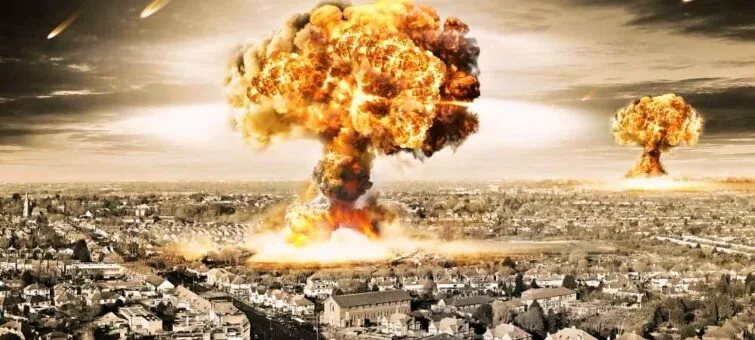
Why do nuclear mushrooms no longer scare us?
The perception of the nuclear threat has changed greatly over time. I am an eyewitness when the Cold War was still raging and any attempts at nuclear threats, for example by one or the other side trying to deploy nuclear weapons near the borders of NATO countries or Warsaw Pact countries. Each time it was accompanied by huge demonstrations and huge media and diplomatic activity that sought immediate de-escalation and change of escalation efforts. I am also a witness when the START1 and START2 treaties were concluded, which stipulated for the USA and the USSR the reduction of the diet of nuclear weapons of both bipolar powers. Of course, I remember how these treaties caused excitement and celebration especially among ordinary people on both sides of the Cold War rivals.
I thought about why that was. Well, we still had vivid images of the two nuclear bombs and their aftermath in Nagasaki and Hiroshima. That's why these mementos had a very intimidating effect on us. Furthermore, as a school requirement, we had defense exercises several times during the school year, during which we were trained in how to behave in the event of a nuclear explosion. Indeed several times during the school year. We also visited fallout shelters on such days and be sure that the prospect of spending several months in those shelters was more than daunting.
Today the situation is completely different. There are no shelters, no military education is taught in schools, so several generations are not aware at all of the consequences of such a nuclear explosion and what will happen immediately after, a few weeks after the explosion, and what will happen in a few months or years after the explosion.
Of course, the nuclear weapons have also changed. There are several types of them according to the intended use, and this can be seen as the next possible steps to escalate a possible war conflict and hope that the adversary will still remain "sane" and in short and well not take off the gloves completely.
The first nuclear weapons were so-called total, "mutually assured destruction" (MAD). Today's are characterized by many gadgets to make these nuclear weapons "less harmful"... I see in this Orwellian "war is peace" and "truth is a lie", i.e. the proverbial doublethink. The accuracy of the attack has increased, the scalability of the destructive effects has changed, the carriers of nuclear warheads have changed from so-called strategic for short distances and low destructive effect to intercontinental with a total effect. There are even nuclear weapons in the arsenals, which do not eliminate the enemy with nuclear fallout or a devastating pressure wave, as was the case with the Hiroshima and Nagasaki bombs, but an explosion at high altitudes will cause an EMP (electromagnetic pulse), which will eliminate all electrical and electronic devices on the ground in a certain perimeter, and thus return the area to the time of primitive communal societies, because the surviving inhabitants will be completely disconnected from any electrical devices and destroys power plants and all possible control centers.
That is why today we are more than often met by representatives of the military and politicians with statements that criminally downplay and relativize the effects of nuclear weapons, because today there are already incompetent and mentally deficient persons in the army and in politics, who find it permissible to escalate a war conflict to a nuclear outcome. Right, Foltýn, Řehko, Černochová, Fialo, Žáček... Right Macron, Starmer, Mertzi...
Today, in Europe, we are meeting countries and their politicians who are flirting with deploying nuclear weapons on their territories... Yes, Poland and the Baltic Chihuahuas, Norway, Finland.
I just want to remind you that since 2007, at the Munich Security Conference, Vladimir Putin has been emphasizing the security conditions important for Russia. And he repeated them publicly almost every year. And what happened in 2022?
My aunt had a very nice cat. She let us children like almost everything. And we, silly children, when she let herself be pulled by the ears and nothing, we pulled on her paws. She still nothing. She only grunted and sputtered a little; it was a piece of cake! Then we pulled her tail, and finally blew into her ears and nose. But then the cat got really angry and bit my cousin so badly and scratched his face that it looked like he needed several stitches.
Today's (j)elites remind me of ill-mannered brats who this time want to test how their citizens will turn out if they keep poking the bear. However, they forget that today there are also weapons that can easily break through several floors of underground bunkers, and there are still weapons for "mutually assured destruction".
Diskuse
Komentáře
K videu: Are we still afraid of nuclear war?
Join the discussion. Sign-in is free.
Načítám komentáře...