Thought Crimes, Cults, and Propaganda: The System’s Evolution Into Nazi Totalitarianism
Thought Crimes, Cults, and Propaganda: The System’s Evolution Into Nazi Totalitarianism
Přepis videa
Zobrazit / skrýt přepis
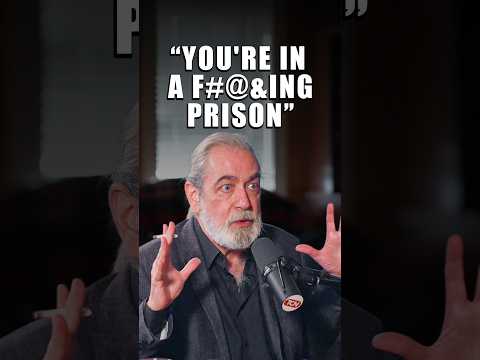
Now, if there's one hallmark of totalitarianism of the 1930s, it's banning books. Book burning. Remember that? We're against it. That couldn't possibly happen now. Oh, it happens a lot. More than it happened in the 1930s. In fact, we're going to talk to a man whose book became a bestseller and then was banned by the government. His crime, he accurately described what once- free western societies have become. Western freedom is only the semblance of the real thing. Sure, you're free to watch Netflix and smoke weed and doom scroll and order Door Dash and live alone, racking up credit card debt in your apartment that you don't own. But if you step out of line and notice what's happening around you, your freedom evaporates instantly and you could find yourself in handcuffs. We watched that happen in 2020. People who challenged the official story, refused to comply, were censored, treated like a despised, hated minority group, ostracized, punished. CJ Hopkins documented all of that as it happened in a series of essays collected in this book, The Rise of the New Normal Reich. And we are proud to bring this book back because it was banned. It was banned. It was kicked off Amazon, was banned in multiple countries in Europe. And so we're publishing a new edition of it. I wrote the forward to it available now on tucker Carlsonbooks.com. And we operate on the assumption because it's true that authorities only censor the truth. and they only censor it when it threatens their power. We specialize in bringing back ban books. We're proud to do that. And CJ Hopkins observations really resonate now 6 years later. He joins us for a conversation about the book and what led him to write it. CJ Hopkins, thank you very much for doing this. >> Thanks so much. You have an amazing life trajectory which um our viewers can read about but just to if I could just summarize it. Uh you begin life in America in Miami. You wind up in New York as a playwright very much a figure of the left I think culturally and politically. Then you wind up in Berlin almost 25 years you've lived in Europe uh really since the Iraq war and but on the left and then COVID happens and then the next thing you know we're reading about you getting arrested by the German anti-racist authorities for something even though you're not a racist like so what h what happened what how did you what was the pivot point that got you from your previous life to wherever you are now? Um I think it's co um yeah that's that's the one. Um >> uh yeah I mean I was you know my life was just going along uh as it had been until uh the co measures got rolled out and uh this is March and April of 2020. Um >> so early >> uh yeah um uh and I had been writing my satirical columns. Um, I had been at that for about four years, you know, covering the whole uh, you know, first Trump administration and the the establishment's reaction to that and uh, when the co stuff started, I at first I didn't take it very seriously. I started I I wrote a few humorous columns. Uh, I just thought it was a massive overreaction and that it would pass. Um, and then it started getting really serious. One of the first things that I did, I think I was still in shock at the time, I compiled a 257 tweet thread on Twitter. It was still Twitter then. Um, just collecting the mainstream media news stories and headlines that were being pumped out. This is when they rolled out the new normal is what I call it. People may remember that. A lot of people think I made that phrase up and I didn't. That it was put out by the establishment. Um uh that thread still exists. People can look at it. Um I think a lot of people have forgotten how uh authoritarian it was, how how immediately authoritarian it was. Yes. >> Um by the end of uh April uh I was just I was quite alarmed by what was happening. You were alarmed but for some reason the people you'd been living and working with and thought you shared you know a common worldview with a lot of them were not alarmed. >> Was that weird? >> Well they were alarmed but they were alarmed differently. They were alarmed about they were alarmed about uh what they were being told was you know uh an apocalyptic plague basically. Um again you know people forget in the early days the I think it was the World Health Organization actually came out and said uh you know this virus has a 3.4% death rate which was complete [ __ ] of course but um but that's a really scary number. >> Yeah. Um and the the way the official propaganda was all rolled out in the beginning um it was aimed at terrifying people and so people were terrified. Uh those >> why were you not terrified? >> Uh well because I was actually looking at the the the data and the the the numbers that were coming out and paying attention to uh I was also paying attention to the propaganda. It's what I do. Um, and when this when this messaging started, um, I couldn't help but look at it and say, "Okay, does it line up with what we're learning about this supposedly novel virus?" Um, and does it make any sense? And it really didn't. >> So, you start to say this publicly in your column and on Twitter, this doesn't make any sense. you're trying to apply the standards of science to what you're seeing in the media and there's a huge disconnect between those two. And so you start to say this, what do the people around you respond with? Well, uh, one of the first things that happened, um, I I I think I criticized it was actually one of my writing students, um, who went kind of nuts on social media and was, uh, referring to, uh, you know, people who were questioning and criticizing the narrative that was being rolled out. she started referring to them as uh you know Nazis, neo-Nazis and uh and so on and I kind of took her to task and uh immediately she responded by calling me an anti-semite and you know a far-right extremist and um >> were you >> uh yes of course no I was not um this is an example of something that was happening on a much broader level in society I at the same time that the official official propaganda was being rolled out. What was also being rolled out um as part of the narrative was that anyone who is questioning the official propaganda is some kind of far-right extremist. >> Yes. >> Right. There's that there's no valid reason uh to do this. Um you know this is back at the time the early uh there were those two doctors I forget where they were in the states and Jay Batacharia was coming out and you know respectable people people with credentials were coming out and challenging and questioning the official propaganda and they were being um delegitimized and demonized and in some cases already censored. Was it I mean what was the exper if you spent a lot of your life as a playwright in Brooklyn? What's it like to be called a far-right extremist? >> It was uh it was kind I don't I don't know how to describe it. Um uh really I I one of one of the first pieces uh uh that got a lot of attention that I wrote um it's in the book is called the Cavidian cult. Um, and my experience of it, I it really felt like uh like I and and those of us who were criticizing or asking questions, it really felt like we were suddenly in a cult surrounded by cult members who were uh uh pressuring us to conform to the official narrative of the cult, which obviously blatantly didn't make any sense. Um, so I don't know if you've ever spent any time around people who are in a cult or Oh, yes. or what have you. I um I remember back in u Florida before I left >> Florida, I went to a big gathering. uh my girlfriend's mother at the time was hooked up with some Maharishi or something and I went in I went to one of their big gatherings and I had to run from the room because of the energy in the room and and and I explained it to people. I said you got to understand in that room the reality in that room that's being generated by all these these people believe that that little guy up on stage is God. Right? And so that's the actual reality that's being generated in that >> were energy. When you say you had to run from the energy, can you describe that? >> It just felt overwhelming, you know. It just felt overwhelming. Um >> and dark. >> Yeah. To me, dark. Yeah. You know, uh an authoritarian energy. Yeah. Dark energy. Um it it it was but it was more that I don't know how philosophical we want to get uh very so early uh you know in a sense in in a sense you know there's a reality there's you know this is reality there's physical material reality and then there's a reality uh right which is something that is a collective and communal consensus that we all partic participate in. >> Yes. >> Um and we don't notice our reality. >> No. >> Right. This reality. When you get into a cult, there's a separate reality. >> Right. And that reality is no longer in line with the reality that we take for granted all the time. So you can become much more aware of it if you're not a part of it. >> Yes. That's right. >> Right. So I I don't know how to describe it any better than that. But you can feel the energy of this of this alternate reality that's being created by belief. Yeah. By belief. In the beginning when in the early days of co I was very much aware of that. Um suddenly everyone was walking around with you know medical looking masks on their face. Um you know people in Berlin you know they were following orders. They were observing the social distancing and and all of this. And to me, as someone who did not believe the official narrative that they were all following, it felt like I was being I was surrounded by cult members who were performing all of these ritualistic behaviors um uh that really only made sense in their fictional reality. Does that make sense? >> It certainly does. >> Yeah. You know, there's no way around it. A small business needs capital to grow. Whether your company is stocking up on inventory, repairing things, hiring more workers, you got to have cash. So, where should businesses get that money? Well, you need a trusted partner. Obviously, big banks are not the answer. Getting loans from family can work really well, but can also be very, very complicated. So, if you don't want to do any of that, we recommend Cardiff. Cardiff's application takes only a few minutes. You can get approved and funded the same day. It's a simple process. It's fast. It respects your time. Carter doesn't lecture you about how their company is gay during Pride Month. They don't care. That's not why they're here. They're here to grant trustworthy loans. They've done it for two decades, over 12 billion to small business. They've been in business for at least one year, and make at least $20,000 in revenue. That's revenue, not profit, right? If that's you, you can apply right now for up to half a million dollars in funding same day. That sounds too good to be true, but it's actually real and it could give your company the boost your company needs. If you want to know more, go to cardiff.co/tucker. Cardiff.co/tucker. Real growth, fastfunding. Borrow better with Cardiff. It's just interesting to me. And you're not the first person I thought this of. It's like, why did you see that when others didn't? And I always ask that question of dissidence, people who pivot against the new new thing, especially when the new new thing is evil and obviously >> nonsensical and co is not the only example of this. But whatever mass hysteria grips a group, they're always some small percentage who are like, wait, this is crazy. And I always wonder what they have in common, and I've never figured that out. >> I don't think there's a single people have asked me that before, and I don't think that there is a single answer to it. >> No, there's not. I think that uh for some people um it's their personal histories. Um some people you know perhaps women who've been in abusive relationships have been manipulated by uh partners, people who have been in cults. >> Um people who have lived in authoritarian societies, you know, totalitarian societies. >> Um I think that's part of it. I think part of it is just the nature of you know of certain individuals. Uh you know I have never been I've never had a great deal of respect for authority and uh you know the time that I grew the years that I grew up in I mean uh we were we were encouraged to question authority. >> Yes. to challenge authority to uh you know not believe everything that the authority said on face value. So it's it's just kind of second nature to me. >> Me too. >> Um I also I think I I I just have a natural aversion when I see people you know be when I see this type of herd mentality forming and this this behavior uh it just sets off my alarm bells. Uh I mean >> because you know at the bottom of the crowd is some individual getting his face stomped. >> Yeah. Of course. Yeah. Or or a number of individuals. Um it's uh you know it's part of the irony of of everything that's happened in my legal cases is you know I've spent my life writing you know anti- athoritarian uh literature. Uh, and I think I'm hyper attuned to the formation of, you know, fascist or, you know, quasi fascist social bodies. It just sets off my alarm bells. It's just, it's remarkable that you were literally in Berlin of all cities when this happened. So, what was for those who weren't living in Berlin during CO and can't really remember what happened during CO, just paint a word picture quickly of what life in Berlin was like during CO. >> Oh god, it's even hard to remember at all. Um, it's all in the book. The measures went into effect uh pretty quickly. Um, the uh they they passed the government actually passed and this is when I started covering what was happening in Germany and in Berlin more. Um they passed uh um an legislation and it was called the infection shoots gazettes um which is the infection uh protection act and uh Tucker essentially is a new enabling act um if people will remember the enabling act of 1933 um which is a large part of how the Nazis took over power in 1933 they passed legislation and they said, uh, we have a state of emergency, uh, you know, with all of these communists running around in the streets and the society is coming apart and, you know, all this social disorder and we need to pass this emergency legislation which will allow us to suspend the constitution. There was a constitution at the time to suspend the constitution and rule by decree. This is 1933. And in 2020, the German Bundist passed legislation that said, "We have a state of emergency. There's a virus that is, you know, attacking society." And so, we need to be able to suspend the constitution and rule by decree. And they did this. Um, uh, there were huge protests. There was a gigantic protest in Berlin in August of 2020. People may remember uh Bobby Kennedy was there gave a big speech for you know ju just I don't know how many people a million people in the street hundreds of >> he was attacked as an anti-semite for this >> of course immediately uh immediately and people may remember um uh they may not remember the big uh demonstration but they may remember the storming of the Reichto right this was actually a dress rehearsal for January 6th Yeah. >> Um and a lot of people don't know this. The u uh the main protest was on the big street the you know the street of 17 July in Berlin that runs from the Brandenburg tour back to the Ziggas to the victory tower right this is the huge street and this is where all of the uh demonstrators the protesters were the main body of it. Aside from that, detached from that, apart from that was the Reichtock building which is over to the side, a separate protest took place there. This protest was permitted by the German authorities. They granted the permit to an ex-member of the NPD, which was the neo-Nazi party, the now banned neo-Nazi party. So they they granted a protest permit to this ex neo-Nazi and there was a small gathering there outside of the Reichto and the German police which normally guards the Reichto pretty well. They all pulled back, you know, hundreds of yards behind the protest and left the Reichto unguarded. And so this group of wackos in front of the Reich dog say there's nobody guarding the Reich. And they go, "Are you serious? I'm absolutely ser this is documented. It's in the it's in the book. It documented it. >> I don't know how I missed all this. >> And the mainstream, of course, the mainstream German media happened to be right there at the Reich, you know, and so when these people came running up the steps and so the whole narrative, the the entire news report was, you know, the crazy COVID deniers, you know, have attacked the Reichto trying to overthrow. Well, since everything is World War II, I think um you know, a lot of people are aware that this is not the first totalitarian movement that's used attacks on the Reichkes dog to seize power. >> Yeah. >> I mean, you would think that be like, "Okay, let's leave the Reich's dog out of this." It's just I I don't I don't mean to insult the Germans or anything, but you know, it's they're not big on subtlety. You know, >> it's like we'll do the race start again. Uh but serious seriously this is I had no idea that even happened. This is docu this is documented and and I wrote it up as uh to me it was quite obviously a uh dress rehearsal um for uh January 6 when when January 6 happened. I was like there it is again. It's the same thing. >> They did it in Brazil. The same thing. >> Yeah. Yeah. But in in in any event, Tucker, that was they passed they passed this new enabling act. And from then on, I I mean it was the most horrifying, heartbreaking thing uh that I've been through in my life. I mean Berlin, you know, people think of Berlin as this bohemian, you know, wild city, >> beautiful city. >> And it transformed virtually overnight, overnight into this pathized fascistic society where, you know, literally everyone was wearing masks everywhere. They were robotically following all the social distancing uh directions. uh you know there were police you know guarding the outdoor markets to make sure that no one was you know going to the outdoor market without a mask on. I was pulled out of a grocery store pretty early uh over a mask protest cuz I thought it was ridiculous you know at this we already knew it was an airborne respiratory virus and everybody's going to get it whatever it is. Um and I was uh rebelling. I I I actually I made a mask out of a paper bag. I took a paper bag and I cut eye holes and a little mouth thing and and I I wrote a protest message on the paper bag which was befail is beail. It's German for orders are orders. It's it's the famous Nureinberg defense, right? You know, we're just following orders. And so I went into the grocery store with this paper bag on my head and the grocery store clerks completely freaked out. It's like what what are you doing? You can't do this. You need to wear a mask. I said, I'm wearing a mask, you know. And it says, "No, no, this is a paper. You have to wear a m" I said, "My mask is just as good as your mask, you know." So, what you you have to leave or we're going to call the police. They called the police. And I think it was two or three armed police pulled me out of the grocery store. That's when I I think that's when I realized how serious it was going to be. Well, anyone who uses Cozy Earth will tell you the exact same thing. It's been a game changer. It's wild. The night's getting cooler. Creating an extremely comfortable space on your bed and couch is a very good thing. Cozy Earth is here to make it happen. Their bubble cuddle blanket. Precisely what it sounds like. How could you not sleep well in one of those? It's really hard not to sleep well. In fact, your kids might wind up physically fighting over gets to use it. You should know that. Cozy Earth sheets are also designed to keep you cool and comfortable all night, preventing you from overheating or kicking off the comforter 2 in the morning. Waking up hot and confused. Overheating at night means a miserable sleep, but Cozy Earth solves that problem. Head over to cozyearth.com. Use code Tucker for up to 20% off home and sleepwware. That's cozyearth.com. Code Tucker. When prompted at checkout, be sure to tell them that you've heard about Cozy Earth right here on this show. Can I ask you to pause there and put this in >> the context that you explained this morning at breakfast, which I thought was fascinating. So just to to summarize your views as you explained them to me in one sentence, you lived in New York. You knew Trump. You were never besided by Trump. You always thought he was buffoonish, but you had sympathy for Trump's voters because they were the working class that you'd spent your life as a leftist like thinking about and you hoping to represent. So you saw CO as kind of part of the response to what was in effect a populist rebellion. >> Yes. Can you flesh that out a tiny bit? >> Sure. Um, yeah, I've got to go way back. I, you know, I started, I spent most of my life, you know, writing weird theater and then I wrote a novel and but I started writing political satire back in 2016. uh because I became interested in this rising populist push back against you know what I see as the global system that we all uh live under and and have been living under since the end of the cold war. Um and as you said I you know I come from the left. Um but I became interested in this in in this populist push back that led to Brexit and led to Trump and then for years I wrote satirical columns. Um, and it was so easy. It's like hitting cans of corn, you know, the just the hysterical overreaction. Um, and the establishment trying to demonize uh not just Trump. I mean, Trump is much less interesting to me than the people who were voting for him and who voted for Brexit and, you know, who were forming uh right populist parties all over Europe. um as a reaction to what this evolving system was doing to their societies. And so I watched for four years from 2016 to 2020, I watched the the system, the establishment responding to this populist uprising or whatever you want to call it, trying to put it down, trying to demonize everyone who was involved in it. Um um and trying to suppress it. And it didn't work. it was still there. It was still going. Um, and then it rolled right into CO. And you know, a point that I made over and over during uh the COVID years, you know, people talk about lockdowns. You know, a a lockdown. Where does that term come from? It comes from prison. >> Yes. >> Right. A lockdown. You you lock everyone down when the prisoners are having a riot, when they're rebelling. And the point of it is to remind them, hey, you're in a [ __ ] prison, >> right? >> Yeah. Fair. >> It's like, you know, you're in a prison. You you guys have, you know, sharpened toothbrushes and spoons and stuff and we have guns, right? So, maybe calm the hell down and get back in your cells and we're going to lock you all down until you remember where you are. To me, that's the way. And I'm not trying to reduce the whole COVID event to this. >> But broadly to me, this was this was the message. This is what was >> happening. It was like, hey, you know, those democratic rights that you think that you have. Well, you have those, you know, you you can you can exercise your democratic rights and you've got free speech and you can do all this and go to the mall and watch Netflix and everything, but if you step out of line a little too far and, you know, do crazy [ __ ] like leave the European Union or elect Donald Trump president, right? you know, well, we can take those rights away from you in a heartbeat and remind you exactly who is in charge and who has the power. That's the way that I started reading the co event very early and I read it that way all the way through. And if you're, you know, running a federal government that's got millions of employees is the largest institution in the world and you want to eliminate from its ranks, you know, anyone who may cause you problems, who's thinking independently or is has a disobedient cast of mind, then requiring a COVID shot that doesn't actually prevent COVID is a pretty easy way to identify them. So, everyone who turns it down, you get rid of them immediately. It's like the perfect purge. It's like kind of brilliant. >> You you asked me about Berlin. Um and there's so much happened and I couldn't get to it. I mean, they literally brought up the co shots. Um they literally imposed a social segregation system based on people's compliance with the vaccination. So that by the end of it uh you know they called it you know a lockdown of the unvaccinated uh by the end of the co period and I don't think that happened in the US but it happened in in Germany and and other places in Europe in in Germany I literally the only place that I was allowed to go in society was to the grocery store to buy food and I had to do that with a mask on my face was the only way that I could get my food but I was not you know people who were not vaccinated who didn't have vaccination vaccination papers. Um, you know, we couldn't go to restaurants. We couldn't go out to any, you know, films or museums or any type of couldn't enter a public building. Couldn't go into stores. We were we were completely segregated from society. >> Did you have to wear a badge? >> I I joked about this in in my columns. No, it was the reverse. They were wearing the badges on their faces, right? those of us those of us without the badges, you know, we were shut out. Uh, you know, one of my favorite cafes, uh, right on the corner, they, and it wasn't alone, it was all of them. They had big signs out front, you know, that you have to show we you had to show either proof of vaccination or uh, proof that you had recently had the virus and recovered from it within a given period of time. >> You had to show your papers. >> You had to show your papers. >> Show us your papers. >> You had to show Absolutely. You had to show your papers everywhere. Everywhere. They literally implemented a social segregation system based on vaccination stat. >> I'm not big on Nazi analogies. Always try and stay away from them. But if you're living in Berlin and there's a fake attack on the Reichsto, there's a suspension of civil liberties because there's a state of emergency. You have to show your papers. People are going around wearing badges on their faces and then one tiny group of non-compliant people is segregated from public life. Kind of an inescapable kind of inescapable comparison. No. Yes. I've I've I've I've never had um um that hesitancy to go for the Nazi analogies. Obviously, >> I'm trying to be polite, but I mean, come on. >> But it's Berlin for God's sakes, you know? It's it's Berlin. We have little there are little plaques in the streets, you know, with the names of the families that got pulled out of those buildings and sent to concentration camps. You know, it's Berlin. I I I joked about this and but it's actually very serious. Part of the reason I ended up in Berlin when I did is naively, you know, I feel like an idiot now, but naively I thought to myself, okay, given the Germans history, right, first with the Nazis and then with the GDR, um, you know, this is the last place on earth that is ever going to flirt with any kind of fascism or totalitarianism or anything like that, you know, and and and it really >> I'm sorry to laugh at you, but the process of getting older There is the process of discovering you're an idiot. I mean, that really is aging. >> Exactly. It felt like such an ass and they went it they went >> totalitarian in a heartbeat. In a heartbeat. >> Ah, we lots of people did, but the Germans have a well-deserved reputation for efficiency. Um, and just a systematic approach to everything that they do, which is great if you're building Audi's, not so great if you're uh
Zobrazena první část přepisu (27 999 z 80 909 znaků).