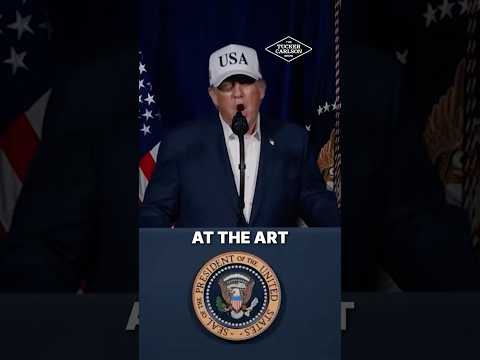
BREAKING: U.S. Resumes Strikes on Iran. A Clean Exit Is Unlikely. Tucker and John Mearsheimer React.
BREAKING: U.S. Resumes Strikes on Iran. A Clean Exit Is Unlikely. Tucker and John Mearsheimer React.
Přepis videa
Zobrazit / skrýt přepis
US Central Command announced just moments ago that the American and Israeli militaries are commencing with strikes on Iran.
These strikes are reported to be planned to continue for the next several days. In fact, this may well develop into another phase of a full-scale war, a hot war, kinetic war, people dying, bombs dropping, missiles flying.
And on one level, this is not surprising if you haven't been checking in on the progress of our war with Iran. But if you have been sporadically reading headlines about where we are and where this is likely to go, you may be a little bit confused because we were just told the other day that a deal, the president of the United States told us that a deal with Iran is imminent any moment now. We've been hammering out the details. Our crack diplomatic team has been traveling back and forth to Pakistan and we're very, very close.
That turns out it's not true. That is, and we counted, the 38th time the president of the United States has announced since March 23rd an imminent deal with Iran. And like the other 37 times, this one turns out to be completely untrue for whatever reason. And we are back to bombing Iran.
And Iran has pledged to respond not by bombing the United States because they can't, but by hitting our allies in the region, the six Gulf states who are our closest allies in the Middle East. And they've almost all of them have sustained tremendous damage. In some cases, very severe damage to military and civilian infrastructure, and they'll continue to do that.
So this is escalating. The war is back on despite repeated promises that it was over, that we'd already won. We could play you a lot of clips. No point really in doing that because it's depressing. We could play you all 38 announcements of an imminent deal. Again, you get the point. But we can't resist playing just one from about six weeks ago. This is the president of the United States saying that victory is already ours and we're all really only hanging around to increase the magnitude of the victory. Here's President Trump:
"We've already won, but I want to win by a bigger margin. But we have, we already, we have destroyed their navy, destroyed their air force, destroyed all of their, uh, if you look at their anti-aircraft equipment, their radar equipment, their leadership, their leadership is destroyed. Uh, we've destroyed everything."
So it's hard to know which of those details is accurate or not because there has been really since February 28th when this began a total news blackout on the details of this war. We don't know how many Americans have been killed. We don't know how many have been injured. We don't know how they were killed and injured. We really don't know anything beyond what we read on the internet or in press releases. And in case after case, that has turned out to be untrue.
So there really has never been a war of this magnitude with this little factual coverage supplying the public with usable information about how it's going. So we don't really know. We can take some of that at face value. The United States military is formidable. It's huge. Has a budget of over a trillion dollars a year. So we can bet that tons of running assets have in fact been destroyed over the last several months.
But fundamentally we can conclude that Iran has not lost this war. In fact, by the only measure that really matters, Iran is winning the war. What's that measure? Well, of course, it's the ability to control the Persian Gulf, the eastern aperture of the Persian Gulf, the Strait of Hormuz, now famous. And as of right now, Iran controls the Strait of Hormuz. It did not when this war began. Now it does.
And so, what do we learn from this? Well, we learn that President Trump is not a great diplomat. He's overselling this like it's an all-you-can-eat buffet in Atlantic City. "Oh, it's going to be the best." And so it's tempting to kind of lay all of the blame at Trump's feet. And on one level, it is all his fault. He decided to do this. Whatever pressures he faced, it was his decision. And he has oversold America's position in this. And he is in some very real way not good at this.
But that would be to minimize the profound nature of this moment. What we're really learning is not simply that Trump is a spotty commander-in-chief, and certainly no diplomat, and obviously not a dealmaker. If you announce a deal 38 times and it doesn't materialize, you're not a dealmaker. What we're beginning to understand, unfortunately, for the rest of us, are not just the limits of Trump, but the limits of American power. That's what we're actually learning. How limited the United States is in what it can do and how it can project its will abroad.
And a lot of Americans, particularly if you grew up and came of age over the last 30 years when the United States had really unrivaled power globally, global hegemony—it was in charge, it was the lone superpower up until maybe 10 years ago, and in the minds of many in Washington it remains the lone superpower—you imagine that the US government could just kind of affect outcomes by articulating them. Say it out loud and it becomes true because it has the biggest and famously best military in global history.
But despite having that military, despite aircraft carriers that cost $120 billion start to finish to put in the water, the United States military has not been able to open that strait to shipping to the rest of the world, to global commodities in months. And there is no promise that we'll be able to.
So we have first and foremost learned the limits of American military power. There are some things we just can't do. And you would have thought we'd be able to do them. Iran, fewer than 100 million people, primitive, backward theocracy that everyone makes fun of, globally reviled as a medieval state. The US military could not force Iran to do one thing: open up a narrow waterway.
So our military power has limits that a lot of us didn't appreciate until February 28th. Our economic power has limits that a lot of people didn't fully understand. It's a little confusing after hearing for decades that the United States has one of the world's largest oil reserves and by far the most sophisticated oil extraction technology—every oil-producing country in the world uses American technology to get the oil out of the ground and the gas. It's a little confusing to learn, but it's true. It turns out that despite having energy independence, the United States is not at all energy independent, and gas is now more expensive in your town because of this war.
Does that make sense? Well, yeah. If you understand the true nature of the US economy, which is globalized, the United States economy, like every other economy on the globe, is linked to the rest of the world and dependent on the rest of the world.
And so while conceptually the US may have enough oil and gas to meet its own needs, in real life the price of Brent crude set on the global market determines the price of gasoline in your town.
Which is another way of saying Iran has massive power over the United States economy.
Who knew that?
We spent decades hearing about how Iran was a military threat. Somehow this sanctioned backward country was going to nuke us for reasons that were never exactly clear because they hate our freedoms. But we thought of Iran—most of us who listen to the media thought of Iran purely in military terms.
Iran is crazy. Iran is heavily armed. Iran is a theocratic Shia death cult and they want to kill us and we should worry about Iran's military power.
Well, here, according to the president, we've eliminated a lot of Iran's military power—its air force and navy. Who knew they had those? But they're gone in any case, according to him.
And Iran is still exercising power over the United States, not just because it's slamming our enemies with drones and missiles, but because it is affecting the price of energy in our country thousands of miles away.
And that illustrates a really important truth: which is the United States is not independent on any level economically because the United States is part of a global economic system that the United States promoted and benefited from in some ways for many decades. So we are ensnared by globalization. There's kind of no way out of it, at least in the short term.
You may want to ignore what happens in Iran or the Persian Gulf and say, "Well, we have, we can meet our needs," but you actually can't. And not just with energy—with every manufactured product, starting with pharmaceuticals and ending with automobiles, all of it is dependent on free trade between nations, on globalization, which again our country promoted and has benefited from. But now we find out that we have a lot less economic power than we thought we have because we're not in control. Control is actually in the hands of international markets, whatever those are, but it's not in our hands.
And the third area in which American power has been radically reduced, obviously, is its moral power, which conservatives spent a lot of time making fun of. Moral power? What's that? We don't have to be loved, we have to be feared.
But it is also true that those very same people in fact acknowledge it when they say America is exceptional. It is a beacon of freedom to the rest of the world. People look to the United States as an example of what we'd like to be. And that's why the majority of global constitutions copy ours—our system of government, liberal democracy.
And all of that rested on the idea that the United States, while flawed and capable of fomenting coups and assassinating people, kind of went out of its way to pretend it didn't.
Now, why did the United States pretend it didn't? Why does the US government do these things and then deny doing them? Well, because even while doing them, the United States government acknowledged those things were wrong. It is never allowed to kill the innocent. Assassination is not war. It's a crime. Killing the families of people you don't like is not allowed. We have done that, but we've never admitted that we're doing it. We've never done it openly. And when caught, we either deny it or apologize for it and put the people who did it on trial—Lieutenant Calley and the rest, etc., etc., etc.
That's why we have war crimes trials: to make the statement that we have standards that are above savagery. We're America. We're better than you morally, not just richer, but better than you. And that has power and we have in fact used that moral power to our great benefit for a long time.
Suddenly that is gone.
How do we know it's gone? Because the United States government is no longer pretending that it is not doing certain things that it has never done before—like assassinate people openly, beginning with General Soleimani at the end of Trump's first term. It is killing civilians. It blew up a girls' school attached to the IRGC naval base in the opening hours of the war and never apologized for it. Not one time did anyone from the US government say, "Well, that was awful. Sorry." Not one time. That's just the cost of war apparently.
And more specifically, and in some ways more shockingly, the United States government has threatened to target and then two days ago targeted civilian infrastructure—meaning the systems that keep people alive, keep civilians alive in Iran and any country: power, water, sewage, electricity, resources for life, the lives of people who were not fighting in the war, who did not make the decisions that led to the war, who are innocent bystanders, the kind of people you are not allowed to kill on purpose.
But when you destroy civilian infrastructure, you are killing them on purpose.
And so, while the US government in war has destroyed civilian infrastructure at scale—by the way, during the Second World War, this has happened before—but it has never happened so openly and without apology. And never once has any American leader threatened in public to kill civilians unless the government of the country he opposes submits. That's never happened because that's barbaric behavior. That's not what civilized nations do.
And suddenly, not only is the US government doing that, but no one is saying anything about it, like that's just fine. And there's also, of course, because why wouldn't you at this point—it's threatening nuclear strikes against entire populations, or as the president himself said, civilizations.
Now let's hope none of that happens and let's hope there aren't further strikes on civilian infrastructure, that civilians aren't killed on purpose. Not simply because we're like bleeding heart liberals that think it's bad, but because it's not good for our country because, well, in the end, what you do will be done to you. That's almost a physics principle. That's just a fact. That's not moralizing. That's reality.
What you do will be done to you.
And the United States has a lot more civilian infrastructure than Iran does. So if the global hegemon is announcing that it's okay to murder civilians in a country you don't like whose policies you oppose, it stands to reason that we may be the victim of that kind of thinking. In fact, it's dead certain that we will be the victim of that kind of thinking. Americans will be the victims of that.
So this is a huge moment and a huge loss for the United States.
But maybe above all—the way in which American power has been reduced, and this is the saddest to say out loud—is that it is suddenly obvious to everyone, both in this country and around the world, that the United States does not have sovereignty, which is another way of saying American leaders aren't really in charge of America. They can make some decisions.
They can make noises and give speeches, but the big decisions, the ones that change the course of history, are not up to them.
They're employees.
They're not the boss.
Now, who is the boss?
Well, that's an open debate.
But in this war, it has become very obvious, undeniable, and in fact, it's been admitted by this administration that the president of the United States didn't decide the time and place of this war.
The prime minister of Israel decided the time and place of this war.
Benjamin Netanyahu was in charge.
Admitting that out loud, and of course it was known to everyone who was paying close attention, is a sea change in the way not just the rest of the world thinks about the United States, but the way Americans think about their own country.
Because the premise of our system is that the people who live here are in charge of it and that they can control its outcomes by voting.
We just had elections in a lot of the country—primaries yesterday—and an ever-diminishing number of people march off to the polls with the notion in mind that I can change things with my vote.
The war in Iran has taught us that actually on the big questions, the people you elect aren't even in charge.
Someone else is.
In this case, Benjamin Netanyahu.
What are the long-term effects of a population understanding that voting doesn't make any difference?
Well, it's hard to know.
We've never been here before in 250 years.
But it's easy to imagine that radicalism, extremism, violence would be the outcome of that.
Because if people cease believing that they have any power whatsoever to change a system that is hurting them, there's no peaceful way to make the pain stop.
They will use non-peaceful means to get what they want.
Democracy famously is a pressure relief valve.
It keeps people calm.
You may not like what's happening right now, but just wait till the election and you can change it.
When people start to believe that's not possible, that it's all fake, that in the end, no matter what you vote for or who you elect—Benjamin Netanyahu or some other foreigner—is in charge of your country or the donors, why wouldn't they take extralegal means to express their frustration?
Well, they probably would, and you would get a violent, chaotic country like so many countries around the world.
So you don't want that.
But unless someone restores not just the fiction but the reality of sovereignty to the United States—meaning you can elect somebody and he can change the system if he wants, if he has a mandate from voters to do it, he can change it in ways that Bill Aman doesn't like—unless that is clearly true, then you're going to get a very radical population.
And if you mix that realization with an economic downturn, which is the obvious end result of this war, who knows what you could get.
So the costs of this war to the United States are profound, and they have nothing to do with Iran's nuclear program or its navy.
Assuming it even had a navy. Did Iran have a navy?
Who cares?
Who cares about its nuclear program?
Actually, Pakistan has a nuclear program.
Lots of countries you don't think should have nuclear weapons, including Israel and France, have nuclear weapons.
What matters in the end is whether the United States survives in recognizable form.
And this war makes it less likely that it will.
Not certain.
It's not lights out or anything, but we are clearly on the road to radical destructive change in the United States accelerated by this war.
And that's bad.
And while we're at it, what about Iran?
What's going to happen to Iran after all this?
Well, of course, it's impossible to really know, because this is so dynamic again.
The announcement was made less than 20 minutes ago that we're back at war and who knows where that will wind up.
But if current trends continue, it seems pretty clear that Iran will emerge from this war stronger—battered, lots of dead people, lots of destroyed infrastructure, probably a refugee crisis, not much of a standing army, maybe, who knows?
But it is very hard to believe that Iran will emerge from this without control.
Maybe shared control with Oman, but still control of the Strait of Hormuz.
And that makes—that one fact alone makes Iran a global player in the globalized economy.
There is no getting around the fact that if you want to get your commodities out of the Gulf, through which a fifth of global commodities flow—energy, petrochemicals—you're going to have to deal with Iran.
So that means that after months of war with Iran, this rogue state, this Middle Eastern North Korea run by crazy people who are cannibals, are throwing gays off buildings for fun, that country becomes almost inevitably a real country that other real countries deal with as a peer country.
It's also pretty easy to imagine an enhanced Iranian economy because at some point US sanctions will either have to be dropped, reduced, or they will just become less meaningful because the US dollar will not be dominant in the way that it is now.
And finally, and this is not a minor point either, Iran's image around the world will be enhanced, and even in the region.
Now, how would that happen?
How would that work?
How could Iran, which is not Arab—it's Persian?
And the Persians and the Arabs do have a long history of animosity toward each other, but also intermarriage and complex relationship for sure, but some animosity, particularly the Persians and the Gulf Arabs.
And it's not just religious difference, there are cultural differences and attitudinal differences that have caused friction between those groups for a long time.
But already Iran, which is bombing Arab countries and destroying Arab countries, is more popular in some Arab countries than it was at the beginning of the war.
Now, how could that be?
Well, because Iran has taken a clear position on the murder of Palestinian civilians, particularly in Lebanon, but not just Lebanon, in the West Bank and Gaza.
Also, Iran has tied its ceasefire negotiations to a ceasefire in Lebanon.
Now, that's not something that resonates with most Americans.
Like, who cares?
But in the Middle East and in the entire rest of the world really, which is watching this—watching Israel destroy Lebanon for reasons that are not clear at all, murder Christians wholesale in Lebanon, destroy Christian villages, bomb Beirut, not a traditional Hezbollah stronghold.
Why are you bombing Beirut?
Unclear, but it's happening, and the rest of the world is watching carefully because Lebanon is a country a lot of people have been to, probably the most beautiful country in the world with some of the most sophisticated people in the world.
It's not Yemen, it's Lebanon.
It's on the Mediterranean, and the rest of the world is watching this in horror, and no one's doing anything about it.
The United States is abetting it.
The United States is helping it happen despite what they tell you.
Those are American weapons and weapon systems being used to murder Christians in Lebanon.
Who is doing something about it?
Iran.
Hate to say that. Wish that weren't true. Wish it didn't fall to Iran to do something about this, but it has. And they are. And they're doing more about this than any other country, including ours, including any of the Gulf States.
Sorry. Because they are tying the reopening of the strait, which the world wants, to an end to Israeli bombing and murder in Lebanon.
So in the eyes of the region, whatever people hate about Iran, and there's a lot that the Arabs hate about Iran, they are uniquely standing up for the Palestinians. The mass murder in Gaza, the genocide in Gaza, and history will record it as that. It is genocide. It is a state policy to eliminate a people and transfer them out of a land. It is genocide by any definition.
It is the biggest thing that is happening at this point in history. It is the biggest thing. It is the thing about which the most will be written going forward. How did the rest of the world watch this and do nothing? How did the United States back this? How did the United States become the only country on the planet other than Israel to approve of this genocide? These are questions normal people will ask fairly soon. They're asking them now.
And Iran, for all of its many faults, as an American, it's painful to admit this, has tried to do something about it. So long-term, that doesn't hurt Iran. Whatever their motive for doing that, that does not hurt Iran. That enhances Iran as a state.
So the whole thing, like so much of life, has turned out to be exactly the opposite of what you thought. You initiate a regime change war against Iran. You kill its elderly cleric head of state. You blow up a girl school. You sink its ships. You decapitate its air force, whatever that was. You unleash the full fury of the largest military in human history on this country. And in the end, almost inevitably, that country becomes stronger and the countries that attack it become weaker.
Again, only in real life do ironies like this exist, but they are everywhere. In fact, that is the story of life. The opposite happens. Who could have called this? Who could have seen this coming?
Well, certainly almost no one in Washington saw this coming because they've been talking about this war with Iran and the need to decapitate Iran and do something about Iran. America's biggest problem is Iran and their proxies and the Houthis and Hezbollah and Hamas. And they've been yammering on about this at the Brookings Institution and CNN and the Atlantic Council and every place where midwits with overpriced degrees gather to talk about the world that they don't understand, whose languages they don't speak.
But whenever they gather in Washington to talk about the world, Iran is at the top of the list of problems we must solve. And in almost none of these gatherings is anyone piped up to say, "Well, wait a second. If we do that, the opposite will happen. Iran will become more powerful and we'll become less powerful." Almost nobody said that in Washington. Literally almost nobody. And if there is somebody, who is that person? There wasn't one.
But there was at least one person outside of Washington who said this. His name is John Mearsheimer. He's been a professor at the University of Chicago since 1982, over 40 years. And he studies international relations, the way that countries get along with each other, balances of power regionally and globally. And he's smart and he's erudite. But above all, he is wise.
He draws obvious conclusions from longitudinal data sets as they say in academia. He looks at what happens over time and tries to understand what this tells us about the way nations behave and about the way people behave, about human nature which is constant. It doesn't change. And because he is one of the very few people in the field of international relations who has this ability married to personal bravery, he's willing to say things that are unpopular, which is the rarest of all qualities in academia. Because he has these two qualities, he has been maybe the only guy or one of the very few guys to call it right.
Back in 2007, he and a friend of his from Harvard called Stephen Walt wrote a book on the so-called Jewish lobby, AIPAC, and whole constellation of nonprofits in Washington that seek to steer the U.S. Congress and the executive, the White House, to giving Israel more money and more military aid, to changing the inherent priorities of American foreign policy, which are to protect and enhance the United States, to do things that are good for the population of America, to change that priority to protect Israel, do what Israel wants.
And the two of them wrote this fairly famous book about it back in 2007 and were immediately attacked. Can you guess? As Nazis and anti-Semites. Well, turns out neither of them was a Nazi or an anti-Semite. Just the opposite. Kind of normal liberals, not racist in any sense. And the charge itself was ludicrous.
You notice what AIPAC is doing? You're an anti-Semite. Be like, "If you criticized Pfizer, you're against all science." I mean, it doesn't make any sense. It's a slur. It's slander designed to make you be quiet. And in most cases, it works, which is why they keep doing it.
But in this one specific case, it didn't work. John Mearsheimer, who had tenure at Chicago, did not lose his job. And not only did he keep speaking, he upped the volume of his speaking and kept telling the world, though most people didn't listen, what he had personally seen and how he interpreted that. In other words, why does the United States military go to war? Mearsheimer, through close observation, concluded: well, in the modern era, mostly it goes to war, big wars, on behalf of Israel.
Here is Professor John Mearsheimer in 2007 describing why the U.S. went to war in Iraq:
It is manifestly clear to most Americans that the Iraq war is one of the greatest strategic blunders in American history. Our argument is that Israel and especially the lobby were two of the main driving forces behind the decision to invade Iraq. It is hard to imagine that war happening in their absence.
To start with Israel, it was the only country besides Kuwait where both the government and a majority of the population favored the war. The Israeli government, to include Prime Minister Sharon, pushed the Bush administration hard to make sure that it did not lose its nerve in the months before the invasion. Other influential Israelis like former prime ministers Ehud Barak and Benjamin Netanyahu also implored the United States to take down Saddam. In fact, Israel was pushing so hard for war that its allies in the United States warned Israeli officials to damp down their rhetoric lest it be seen as a war for Israel.
I might also add that President Clinton said in 2006 that every Israeli politician I knew thought that Saddam was so great a threat that he should be removed even if he did not have WMD.
Zobrazena první část přepisu (27 799 z 131 018 znaků).